
June 1, 2026: Remembering Marilyn Monroe's Lasting Impact on American Culture
For my birthday in 2021, I knew where I would spend it. That morning I headed to Westwood Village Memorial Park Cemetery in Los Angeles, California, and made a beeline to her final resting place. Crypt No. 24 in the Corridor of Memories is one of the most visited grave sites in the world. Joe DiMaggio, her second husband, reportedly had roses delivered to her crypt three times a week for 20 years after her death. More than six decades after her death, Marilyn Monroe remains one of the most recognizable faces on the planet. Her image adorns gallery walls, college dorm rooms, and fashion runways with equal comfort. She is simultaneously a pop art icon, a feminist subject of debate, a Hollywood legend, and a symbol of the contradictions at the heart of the American Dream. To understand Marilyn Monroe's lasting impact on American culture is to understand something essential about how America sees beauty, celebrity, vulnerability, and ambition.
A New Kind of Star
When Norma Jeane Mortenson reinvented herself as Marilyn Monroe in the late 1940s, she wasn't just changing her name — she was constructing a persona that would challenge and captivate in equal measure. Hollywood had seen blonde bombshells before, but Monroe brought something different: an almost unbearable sincerity beneath the glamour. She made audiences feel that the dazzling exterior concealed a real, feeling person, and that tension became the engine of her cultural power.
Her performances in films like Some Like It Hot, Gentlemen Prefer Blondes, and Bus Stop demonstrated a sharp comic intelligence and emotional depth that her "dumb blonde" public image consistently undersold. That gap between perception and reality would become one of her most enduring legacies — a cautionary tale about what fame demands of those who achieve it.
Redefining Beauty and Desire
Monroe's physical presence fundamentally shifted American beauty standards in the 1950s, offering a lush, unapologetic femininity at a time when postwar culture was simultaneously celebrating and constraining women. She was curvy, sensual, and unabashedly so — a contrast to both the rigid propriety of the era and the waif-thin ideals that would follow in later decades.
Her influence on fashion was immediate and enduring. The white halter dress from The Seven Year Itch, the sequined "Happy Birthday" gown she wore for President Kennedy, the figure-hugging silhouettes she favored — all became touchstones of American style. Designers from Versace to Tom Ford have returned to Monroe's aesthetic repeatedly, and contemporary stars from Beyoncé to Kim Kardashian have explicitly invoked her image at major cultural moments, acknowledging her as the original template for a certain kind of luminous, powerful femininity.
Pop Art and the Democratization of Icons
No examination of Monroe's cultural impact is complete without Andy Warhol. His 1962 silkscreen series transformed her face into a symbol of mass reproduction, celebrity worship, and the peculiar American alchemy that turns human beings into products. Warhol understood instinctively what Monroe's life illustrated tragically: that in modern America, a person can become an image, and the image can outlive — and ultimately consume — the person.
That series didn't just make Monroe an art world fixture; it established the framework through which subsequent generations would understand celebrity itself. Every modern conversation about the dehumanizing machinery of fame owes something to the way Warhol used Monroe's likeness to ask uncomfortable questions about what we do to the people we idolize.
A Feminist Icon — and a Cautionary Tale
Monroe's legacy has been reclaimed and reinterpreted by feminist scholars and cultural critics in powerful ways. Her story exposes the brutal economics of the male gaze, the exploitation embedded in Hollywood's studio system, and the impossible standards placed on women who dare to be both beautiful and ambitious. She sought serious acting roles, studied at the Actors Studio, and fought her studio for creative control — struggles that were largely dismissed or ridiculed in her lifetime and only recognized for their significance later.
At the same time, her life remains a sobering reminder of the cost of living entirely in the public eye. Monroe's struggles with mental health, substance dependency, and personal instability were spectacles for a voracious press and public. Modern celebrity culture — with its paparazzi culture, social media exposure, and relentless consumption of stars' private pain — follows a pattern Monroe's life helped establish.
The Undying Image
What makes Monroe's imprint on American culture so indelible is precisely this multiplicity. She is a glamour icon and a tragic figure, a comedic talent and a sex symbol, an object of the male gaze and a proto-feminist. She contains contradictions that American culture has never fully resolved, which is why her image keeps returning, generation after generation, to be reinterpreted anew.
Marilyn Monroe didn't just reflect American culture — she became a mirror in which America has been examining itself ever since.
May 29, 2026: Remembering JFK
It was the morning of my first book fair; I was in second grade. I walked into our laundry room, where my mom was washing clothes.
“Mama, I need some money to buy books at the book fair today.”
She reached into her pocket, pulled out a handful of change, and placed it in my hands. I stared down at the assortment of coins. I expected more, but I didn’t say a word.
The book fair took place in the teacher’s lounge, across the hall from my classroom. I must have surveyed what was available that morning because I remember spotting two oversized envelopes that contained facsimiles of important American documents like the Mayflower Compact, Declaration of Independence, the Constitution, the Bill of Rights, and the Emancipation Proclamation.
Over the intercom, the classes were called by grade, with the sixth graders getting first dibs at the books. Sixth graders, fifth graders, fourth graders, third graders… all of those kids… hundreds of them had a chance to buy those two envelopes packed with the most important documents in American history before my chance arrived.
I felt so hopeless.
Finally, they called for Mrs. Black’s second-grade class. I rushed past my classmates to that big box at the far left-hand end of the teacher’s lounge, and felt this gigantic sigh of relief. Both envelopes were still there, and the 65 cents the envelope set me back allowed me just enough money to make one more purchase that late Friday morning.
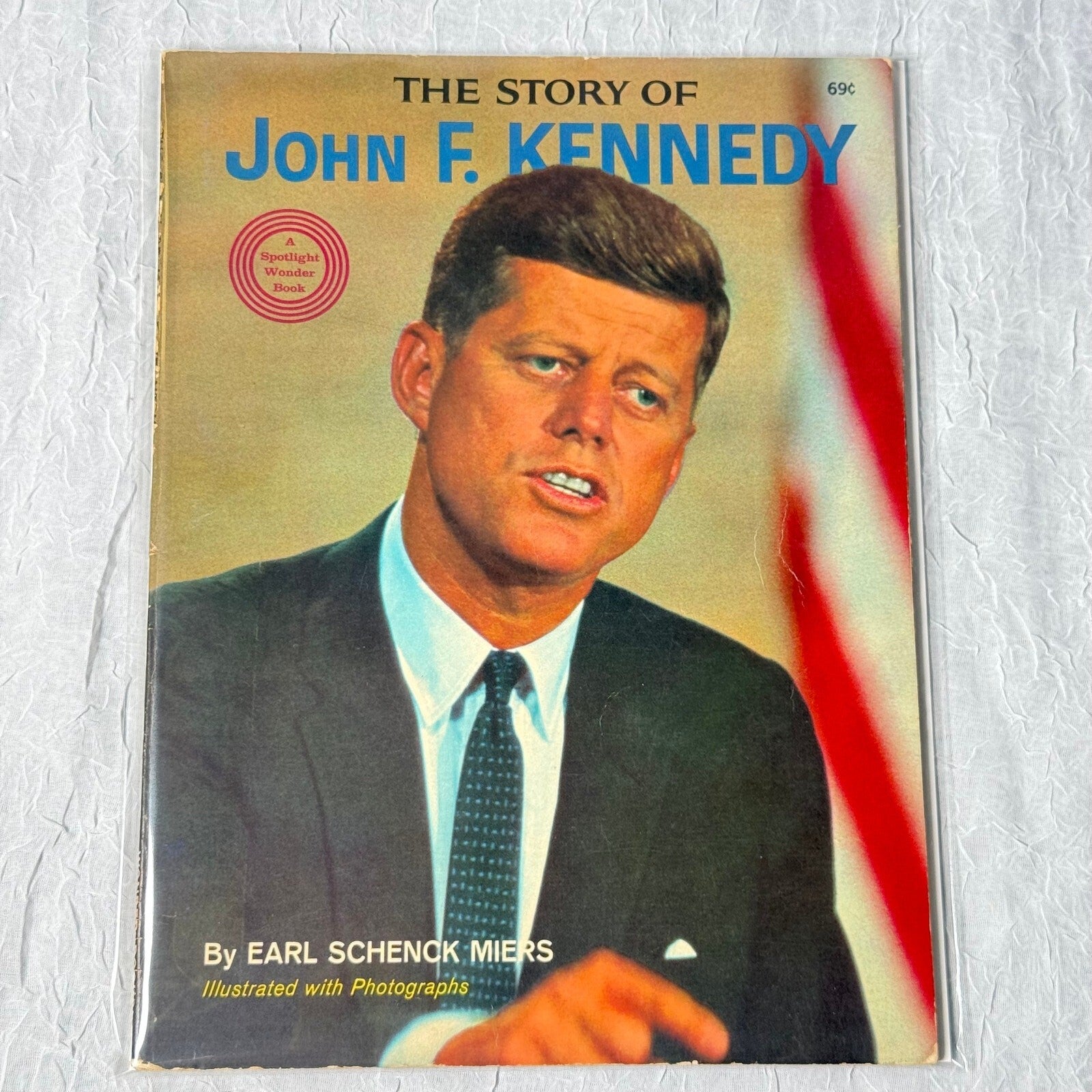
It didn’t take me long to choose The Story of John F. Kennedy, written by Earl Schenck Miers, and published by Wonder Books, Inc. in New York in 1964.
As an adult, I learned that Earl Schenck Miers had a remarkable personal story. He moved to Hackensack, New Jersey, as a child and began writing on a typewriter because cerebral palsy prevented him from writing with a pencil. He later received honorary degrees from Lincoln College and Rutgers University.
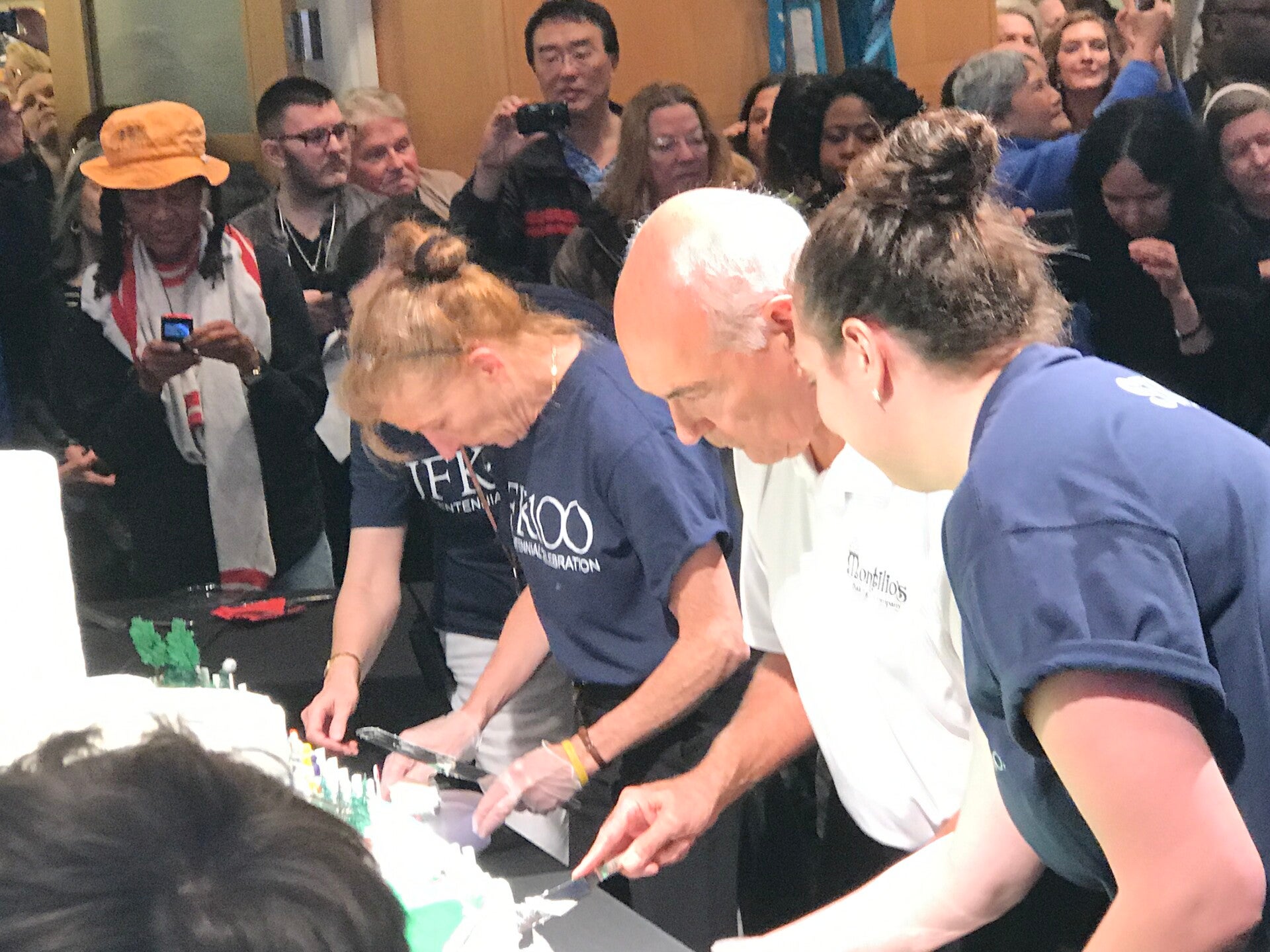
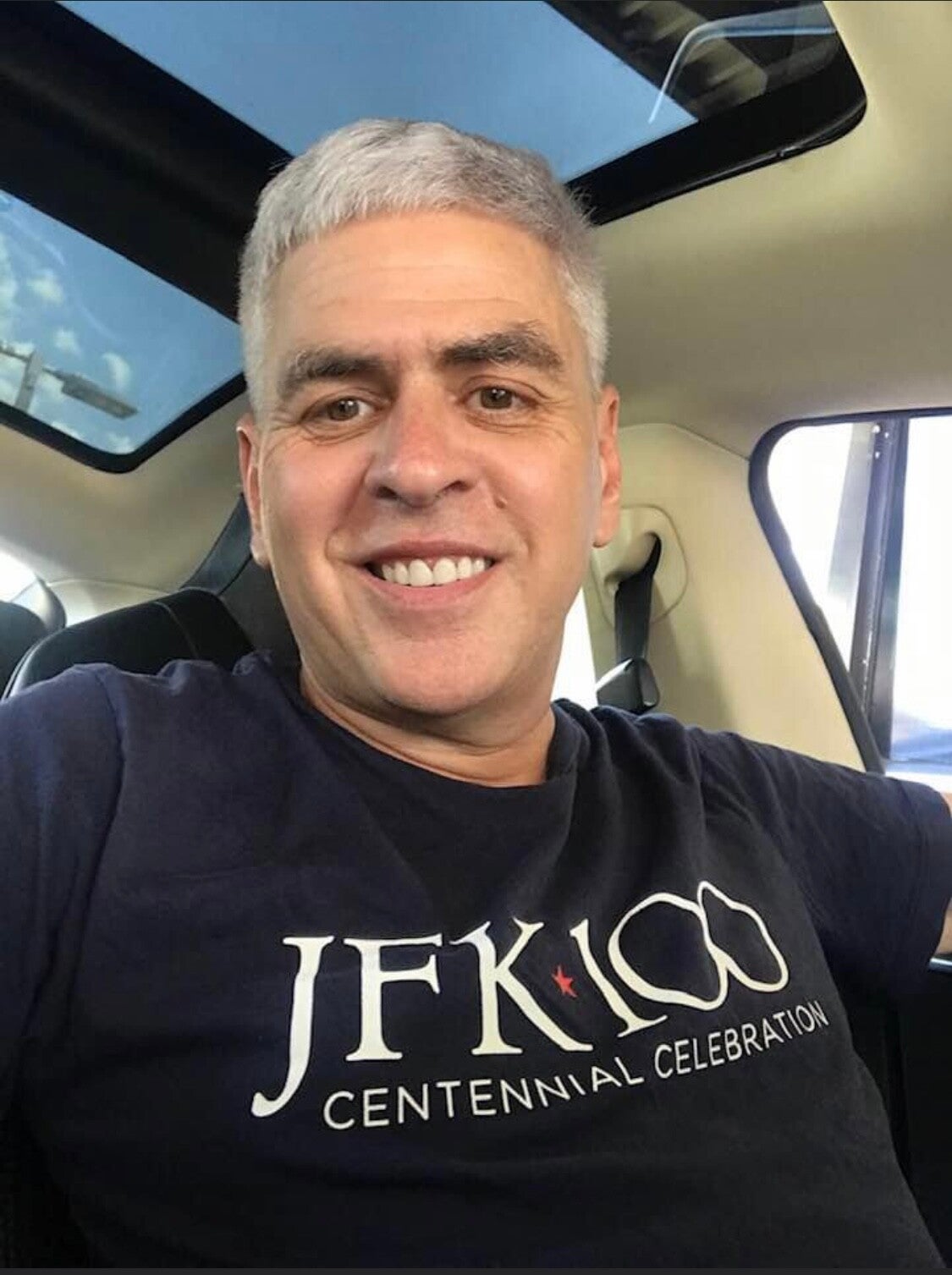
Nine years ago today, on the occasion of JFK’s 100th birthday, I was in Boston to attend the centennial celebration at the John F. Kennedy Presidential Library.
The highlight of the day was the cake. Montilio's Bakery in Brockton created a cake replica of the John F. Kennedy Presidential Library and Museum itself, unveiled on May 29. Employees worked from Thursday, May 25 through Sunday, May 28 to finish it in time. The cake measured seven feet by eight feet, weighed 400 pounds, and required 180 pounds of sugar, 120 pounds of flour, and 80 pounds of eggs to make.
The cake was designed to serve one thousand people. Montilio's Bakery has a long and storied relationship with the Kennedy family — they were originally commissioned to bake then-Senator Kennedy and Jacqueline Bouvier's engagement cake, and since then have created cakes for everything from the dedication of the JFK Library to Rose Kennedy's 90th birthday.
The museum unveiled a new year-long exhibit featuring 100 original artifacts, documents, and photographs — 40 of which had never been seen by the public before — from Kennedy's life and political career. The collection included personal belongings such as his sunglasses and ties, and even the speech he was going to deliver in Dallas the day he was killed.
The exhibit, JFK100: Milestones & Mementos, ranged from his mother's notes about Jack's childhood health all the way to those undelivered Dallas remarks.
Other never-before-seen items included an original portrait photograph of JFK at six months old from a photo studio in Brookline, and a crayon drawing of a tree he made as a child.
I was nine months old when an assassin’s bullet struck down JFK on a November afternoon in Dallas. But my mother saved every newspaper and magazine that mentioned the young president, unaware of what an American history buff I would soon become.
If you are over 70 today, you didn't just read about that era in a history book. You lived it. You felt the electricity of that inaugural address. You watched Jackie transform the White House into something luminous. You followed little Caroline and baby John-John the way people today follow a beloved family on social media — with warmth, with investment, with something that felt almost personal.
When I was in fifth grade, I remember my teacher, Mrs. Bankston, recalling the students’ reaction to the assassination at Denham Springs Elementary School. Their reaction spoke to the racism that dominated my hometown in that era. I, on the other hand, have always had a tremendous appreciation for John F. Kennedy and the future for America that he represented.
Here’s why your memory matters now.
Your grandchildren and great-grandchildren are growing up in a world that can feel fractured and cynical. They have never known a moment when the whole country stopped, turned on the same three channels, and mourned together. They have never felt the particular mixture of hope and heartbreak that defined your generation's coming-of-age.
But you have. And if you are writing your memoir, your life story, or even just a letter to leave behind, the Kennedy years deserve a chapter.
Not because history requires it — but because your version of it is irreplaceable.
What did your family talk about at the dinner table when the news came from Dallas? Did your mother cry? Did your father go quiet? What did you believe about America in 1961 that the rest of that decade slowly complicated? Was there a brief, shining moment in your own life — a time of hope and possibility — that felt, in its own way, like Camelot?
Those are the questions your descendants will wish they had thought to ask.
At Stories That Define Us, we believe every life holds history worth preserving. The Kennedy era isn't just a chapter in a textbook. For millions of people, it was the backdrop against which they fell in love, started families, built careers, and first learned that the world could break your heart.
If you are ready to write that story — or finally tell it — we are here to help you find the words.
Your memory is a gift. Don't let it go unwritten.
— John Michael Lockhart, StoriesthatDefineUs.com